I think most of us have toyed with the word “resolution” over the years (can I get an “Amen sister.” ?). The trouble is I, for one, have been using the word incorrectly. Or at least not fully appreciate it many intricate meanings. Let’s take a look at it in detail.
* [Note to purists: this is NOT the official definition as the 1821 version of Noah Webster’s English Dictionary is not available online that I am aware of. I simply do not have the time to get it off the shelf and type in all of these symbols.]*
re·solve (rE-zolv)
v. re·solved, re·solv·ing, re·solves
1. To make a firm decision about.
2. To cause (a person) to reach a decision. See Synonyms at decide.
3. To decide or express by formal vote.
4. To change or convert.
5. To find a solution to; solve.
6. To remove or dispel (doubts).
7. To bring to a usually successful conclusion:resolve a conflict.
8. Medicine To cause reduction of (an inflammation, for example).
9. Music To cause (a tone or chord) to progress from dissonance to consonance.
10. Chemistry To separate (an optically inactive compound or mixture) into its optically active constituents.
11. To render parts of (an image) visible and distinct.
12. Mathematics To separate (a vector, for example) into coordinate components.
13. To melt or dissolve (something).
14. Archaic To separate (something) into constituent parts.
15. To reach a decision or make a determination:resolve on a course of action.
16. To become separated or reduced to constituents.
17. Music To undergo resolution.
18. Firmness of purpose; resolution.
19. A determination or decision; a fixed purpose.
20. A formal resolution made by a deliberative body.
The American Heritage® Dictionary of the English Language, Fourth Edition copyright ©2000 by Houghton Mifflin Company. Updated in 2009. Published by Houghton Mifflin Company. All rights reserved.
So now that we/I understand all of the implications of that word I want to officially place a resolution before us:
I resolve to:
be AUTHENTIC
be WHOLE
be HEALED
move from DISSONANCE to RESONANCE
render the parts of my life SEPERATE and DISTINCT
move from DOUBT to BELIEF
There are so many aspects of my own life that have moved from clarity to chaos this year. It began one year ago in Haiti as I dressed a tiny child who had left this mortal body for an immortal one. We dressed her and wrapped her and placed her challice into a lightbulb box. A lightbulb box. Her tiny beautifully perfect body was placed into a lightbulb box for burial. That image will never ever leave me. It was so senseless to me (at the time) – to see such loss that could have been prevented (I thought). I moved and lived in grief for this child and others like her for many of the following weeks. I felt the *dissonance* in my soul for months.
*dis·so·nance noun \ˈdi-sə-nən(t)s\
1. lack of agreement; especially : inconsistency between the beliefs one holds or between one’s actions and one’s beliefs — compare cognitive dissonance
2. an instance of such inconsistency or disagreement: a mingling of discordant sounds; especially : a clashing or unresolved musical interval or chord*
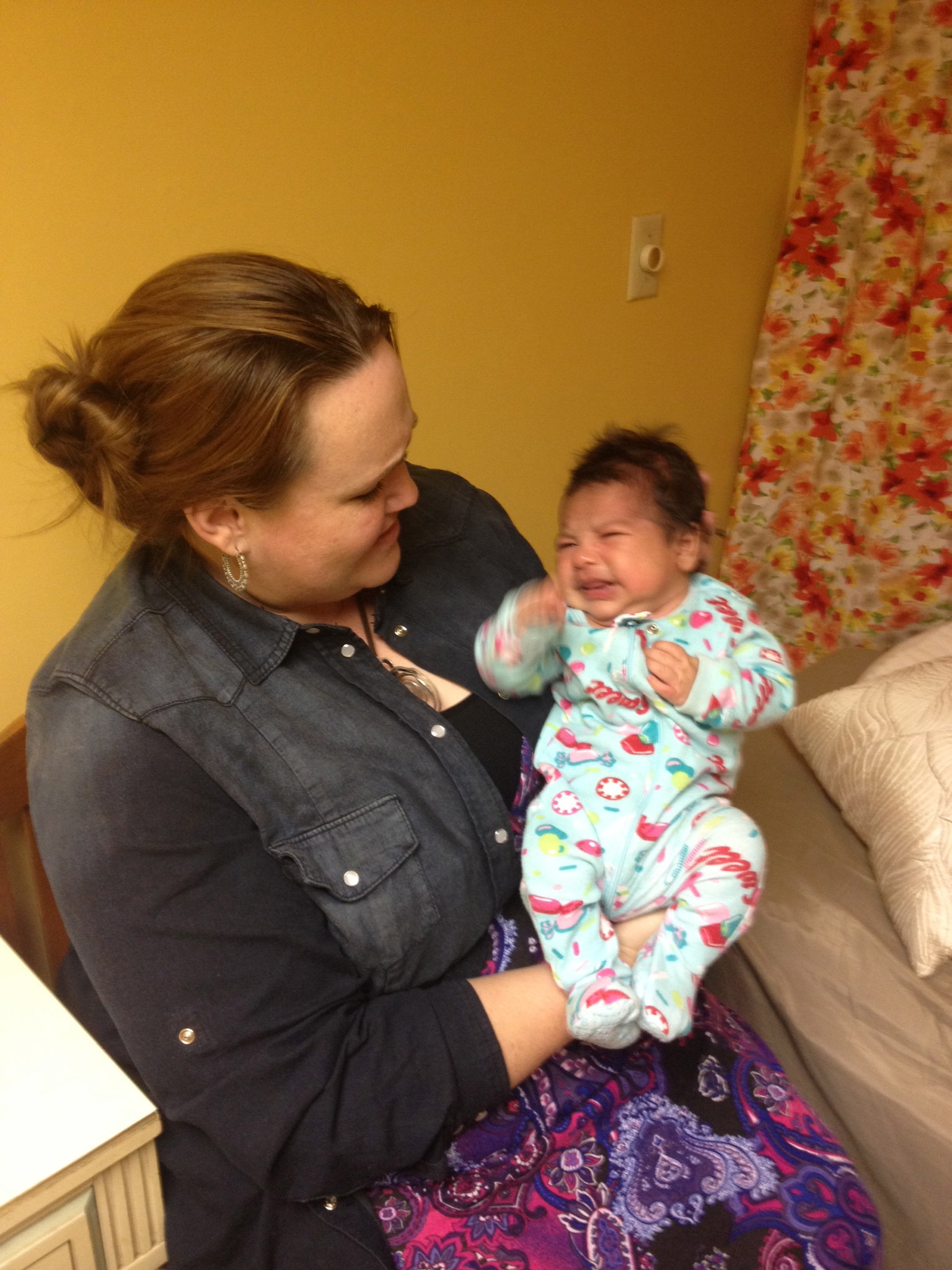
This past month has been perhaps one of the most difficult and challenging times of my adult life. 2007 was the only other year that came close to this one. And it honestly paled in comparison. As I sit to type this I have 2 babies that I attended at birth in the NICU of my local children’s hospital. They are both perfect and will be home within the week but still. For some perspective: I’ve had 4 transfers in 3 months time – more than the total of the past **4 years combined**. There has been alot of talk about Kelly being burned out. Kelly is over worked. Kelly takes on too much. Kelly is an over achiever. Kelly has lost her love of midwifery. Kelly isn’t as “committed” as she once was. Well let me tell ya’ll something. Let me tell the universe:
**KELLY HAS NEVER BEEN MORE COMMITED TO WOMEN AND FAMILIES AS SHE IS RIGHT NOW IN THIS MOMENT.**
Yes, it has been hard. No, I don’t have any answers. Trust me when I say I have spent hours on my knees in tears begging for the POWER to make it all different. I don’t have that power. Never will. And perhaps that’s a good thing.
Because that little life – you know the one I thought was senselessly lost? She has changed my life. Which will change other lives. And the trickle effect of her 22 weeks of life in the womb will FOREVER be felt in the human collective. How awesome is THAT?! Her life IN THE WOMB is going to have a bigger impact that most of ours will in living years and years and years?!
Now I get that some people reading this are going to be doubters. That’s ok. I get it. But see that last thing on my resolved list? I resolve to move from DOUBT to BELIEF. I don’t live there anymore. Old address, please forward all mail. I believe that her life mattered. That mine matters. That I am here for a divine purpose that was written on my BONES to walk out before the world was even formed.
The notes that make up the music that is my life have moved from a clanking, clashing, harsh and unwelcome dissonant sound to one of **resonance** that the most talented of composers could envy.
What about you?
Join me?
Please comment below if you want to join this resolution with me. Of course you can find me on FaceBook – look for the Village there. http://www.facebook.com/MyHealthyVillage and on Twitter @VillageKelly #villagehealth


 Dar a Luz Women's Care